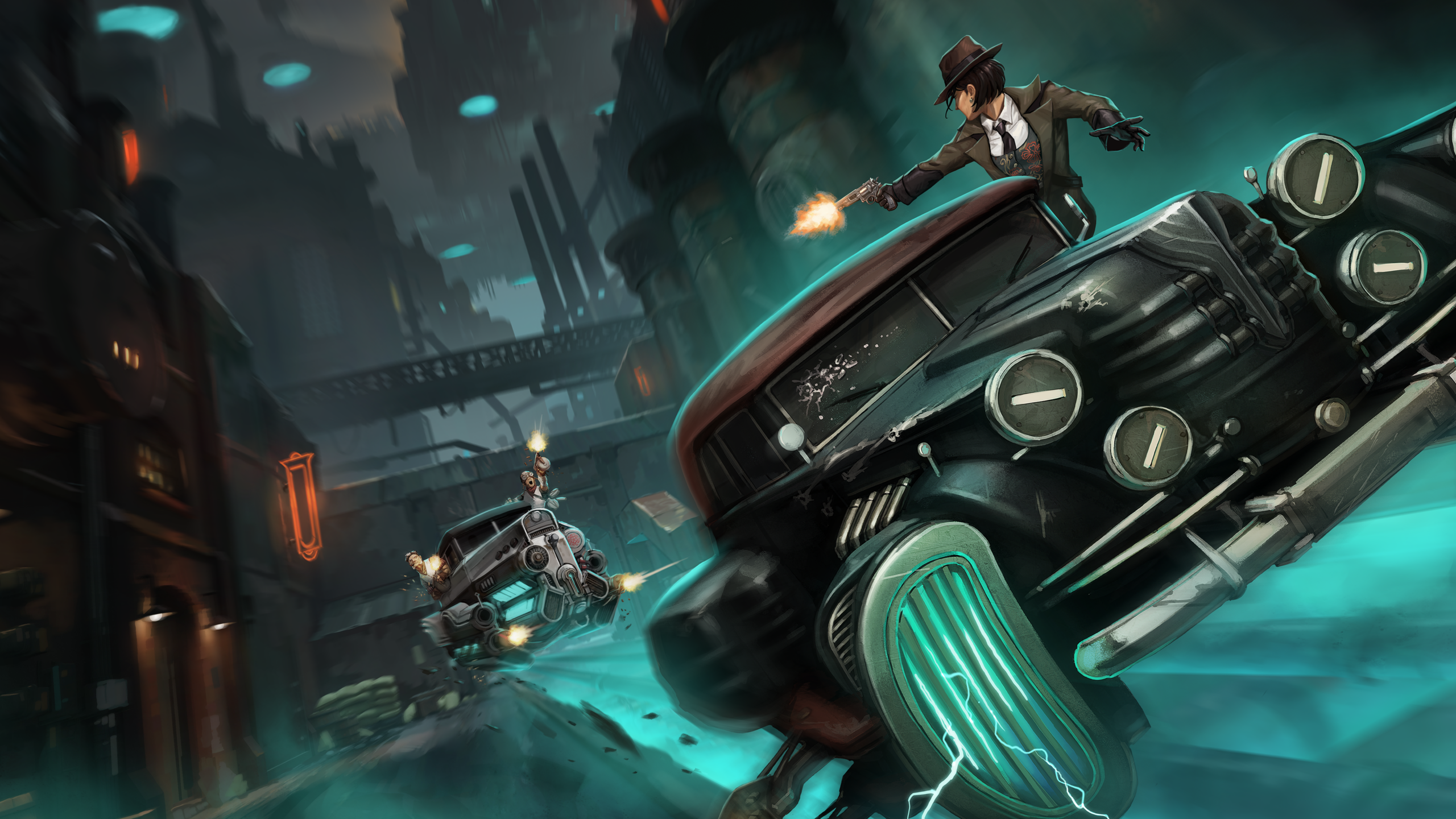
I got onto Aether & Iron by booking Pyotr “Needles” Portnoy — main cast, significant role, real meat to work with. But I wrapped the project with another 60+ characters with my name on them.
That’s the world of additional voices, and honestly? It was a blast.
Here’s how it works. Studios book actors in session blocks — usually 2 or 4 hours. As an actor, you’re paid for the full block regardless of whether you’re in the booth for 15 minutes or the whole thing. You set that time aside, you get paid for it.
Now, a character like Needles might have varying amounts of lines depending on which act you’re recording. Sometimes you burn through your material faster than expected and you’ve still got session time on the clock. So what does a smart studio do?
Let me introduce you to additional voices.
In a game like Aether & Iron, you’ve got a living, breathing world full of characters the player interacts with. A lot of them only have a line or two. It’s not feasible to bring in a separate actor for every single one of them — you’ve got minimum session fees to consider, schedules to manage, budgets to stretch. So instead, you sprinkle those characters across your existing actors who have room in their sessions. And presto — your world gets populated, your session gets filled, and your actor gets to do something genuinely fun.
I was loving it. It’s not often you get to flex your range across that many different people in one project.
Was it easy? Hell no.
—
Here’s what I was guilty of early in my career: trying to hide the fact that I didn’t always know what I was doing.
I didn’t want to slow down the session. I didn’t want the director thinking they’d booked the wrong guy. So I’d make decisions on my own, push through, and hope for the best.
An old supervisor of mine at Best Buy used to say: *”If you don’t have time to do it right the first time, how are you going to find time to do it right the second time?”*
Took me longer than I’d like to admit to apply that to a recording session.
What’s worse for a director — an actor who asks a quick question, or an actor who doesn’t get the scene and just keeps grinding out wrong takes? One of those costs thirty seconds. The other costs everyone.
—
Now I’m not saying hold up the session to workshop every NPC. If the character is “Lackey 4” and his line is “Take this, bub!” — you do not need his full backstory. Read the room.
But is he swinging something or throwing something? Close range or distance? Those things matter. They change the physicality, the breath, the whole feel of the line.
If you don’t ask, you might think *”could be either — I’ll do a near and a far”*. Two takes. Then you get redirected: close range, heavy weapon. Two more takes. That’s four takes on a two-line character nobody’s going to remember.
Or you ask one question, get your answer, give your A and B, and move on. Easy.
The goal was never to perform a voice. The goal is to understand what’s happening — and then the voice figures itself out.
—
I have to give Aether & Iron a specific shoutout here. The scripts were a dream. Direction baked right into the sides, context for the scene, notes on tone. Not every production gives you that. When they do, you feel it. It made my job easier and the work better, and I’m grateful for it.
But even with great scripts, the process is the same every time. Get your context. Form an opinion on who this person is and what they want in this moment. Set your intention.
Only then do you decide how they sound.
This is the part people get backwards. They lead with the voice — *”this guy sounds like this”* — and try to retrofit the performance around it. Flip it. Two characters can have nearly identical voice prints and still sound completely different because they come from completely different places. Context does that work for you without you even trying.
—
Over 60 characters is a lot. I’ll be honest — I walked out of those sessions wondering if I’d accidentally made three of them sound identical.
That worry doesn’t go away. It’s just part of it.
But if you’ve done the work — got your context, made your choices, asked the questions worth asking — you’ve set yourself up. The rest is trust.
Give yourself the proper tools and get out of your own way.
—
Aether & Iron is out March 30th (in the US) on Steam. I’m Needles. I’m also approximately 62 other people. See if you can spot me.